

October 2026
The views and opinions expressed in this blog are solely those of the author and do not necessarily reflect the official policy or position of Education Insights Center (EdInsights) or the California Education Policy Fellowship Program (EPFP).

Lorenzo Sianez Jr., CA EPFP 2025-26 Fellow, San Diego State University
Over the past decade, California’s K–12 education system has expanded its investment in multilingualism through initiatives such as Proposition 58, the State Seal of Biliteracy, and Global California 2030. Together, these efforts have strengthened California’s capacity to develop multilingual talent. More recently, statewide workforce planning efforts have recognized language skills as one component of workforce readiness. Less clear, however, is how those skills are translated into professional pathways.
Although universities have long recognized the academic and cultural value of language education, multilingual competencies are less frequently viewed as workforce skills with clear labor market value. As language course enrollments have continued to decline nationally, demonstrating the workforce relevance of multilingual competencies becomes increasingly important.
Healthcare as a Case Study
In 2023, approximately 2.65 million Californians worked across healthcare sectors, representing roughly 14 percent of the state’s workforce, according to the UC Berkeley Labor Center. As California’s population ages and healthcare demand grows, sustaining a well-prepared and culturally responsive workforce is both an economic and public health necessity.
Recent efforts such as the Los Angeles County Nursing 2035 Initiative demonstrate how educational pathways are being aligned with workforce needs. Building on these efforts, an important question remains: How can higher education prepare a healthcare workforce equipped to serve California’s increasingly diverse communities?
One area where multilingual competencies are especially valuable is communication between providers and patients. Extensive research on language-concordant care (delivered by a provider who speaks the patient’s preferred language) links to stronger provider-patient trust, higher satisfaction, and better clinical outcomes. The National Standards for Culturally and Linguistically Appropriate Services recognize culturally and linguistically responsive communication as part of quality care. Achieving this goal, however, requires a workforce prepared to meet the linguistic needs of diverse patient populations. California’s linguistic diversity further highlights workforce and equity opportunities created by multilingual education.
According to the U.S. Census Bureau (2015), about 44 percent of Californians speak a language other than English at home. Nearly seven million Californians speak English less than “very well.”
If language concordance can strengthen equitable access to care and improve patient experiences, the focus should shift from whether language competencies matter to how higher education can help students translate those competencies into professional practice.
The field of Language for Specific Purposes (LSP) offers decades of research on effective approaches to developing discipline-specific language competencies.
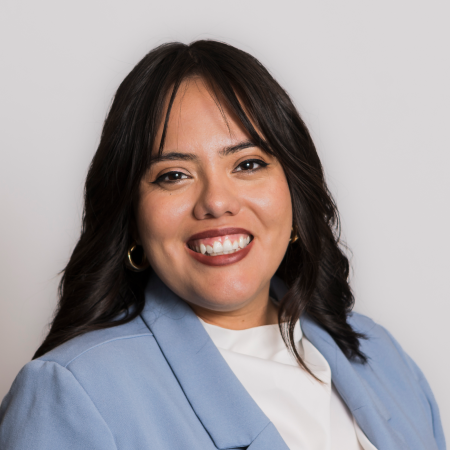
Dr. Alicia Muñoz Sánchez, University of California San Diego
Preparing Students Through Profession-Specific Language Learning
Recognizing the value of multilingual competencies is only the first step: California’s students must also be equipped to apply these skills within complex professional environments. Standard conversational fluency does not automatically translate into the specialized, nuanced communication required in high-stakes settings like healthcare.
Although healthcare employers and continuing education programs offer some profession-specific language training, higher education has an opportunity to introduce these competencies before students enter the workforce. Developing profession-specific language proficiency takes time. Earlier preparation creates more opportunities to build the functional communication skills needed in clinical practice.
LSP offers evidence-informed models that move beyond vocabulary memorization to prepare students for the cultural responsiveness and communication demands of professional practice. Courses like Spanish for Health Sciences at UC San Diego demonstrate how profession-specific language instruction can prepare students for patient interactions. Its transition to the UC Online platform illustrates how these educational opportunities can be expanded across institutions.
Profession-specific language instruction is more effective when paired with community-based practicums and internship opportunities. Initiatives such as UC San Diego Health Frontiers in Tijuana or the UCSD San Diego Student-Run Free Clinic Project provide experiential learning opportunities where students apply Spanish-language competencies in clinical settings. These experiences help students put multilingual competencies into practice while building social capital through professional networks and career guidance.
Moving from Investment to Impact
California has established a strong foundation for developing multilingual talent through K–12 education. In alignment with the Master Plan for Career Education, higher education institutions have an opportunity to better connect multilingual competencies with regional workforce pathways. Three opportunities emerge for higher education leaders and policymakers:
- Recognize Profession-Specific Multilingual Competencies: Develop approaches to identify and communicate profession-specific multilingual competencies as workforce skills. The California Career Passport proposed in the California Master Plan for Career Education could serve as one vehicle for documenting these competencies and helping students showcase them to employers.
- Integrate Languages for Specific Purposes (LSP) into Health Science Pathways: Embed discipline-specific language courses into health sciences curricula so they can fulfill degree requirements or workforce preparation pathways, while expanding support for profession-specific language pathways aligned with regional workforce needs.
- Expand Education-Healthcare Partnerships for Multilingual Experiential Learning: Leverage and expand partnerships between higher education and healthcare organizations to increase internships, clinical placements, patient navigation, and community health worker experiences.
Ultimately, the goal is not simply to graduate more multilingual students. Instead, those competencies should become a deliberate part of a workforce strategy that advances equitable access to care, responds to regional labor market needs, and maximizes the public value of California’s investment in multilingual education.